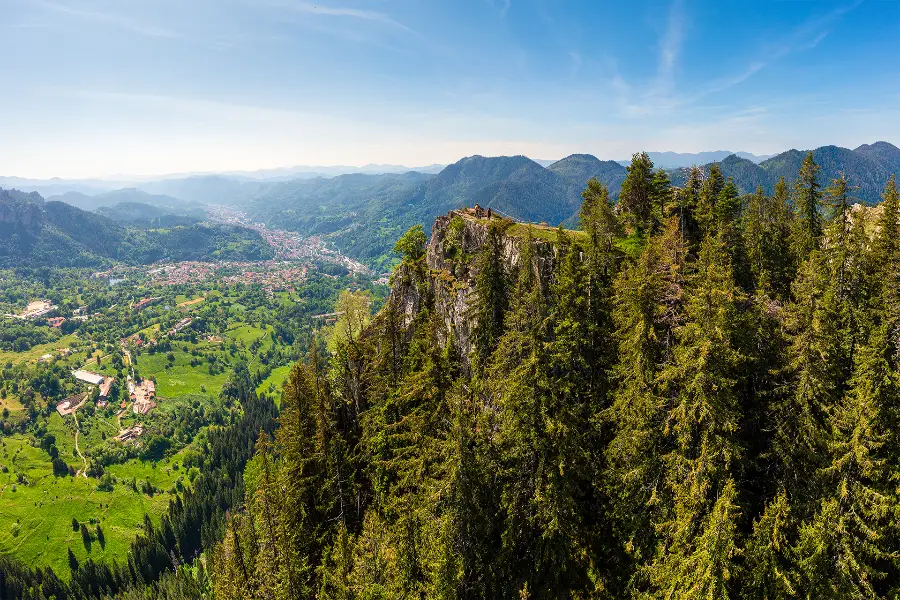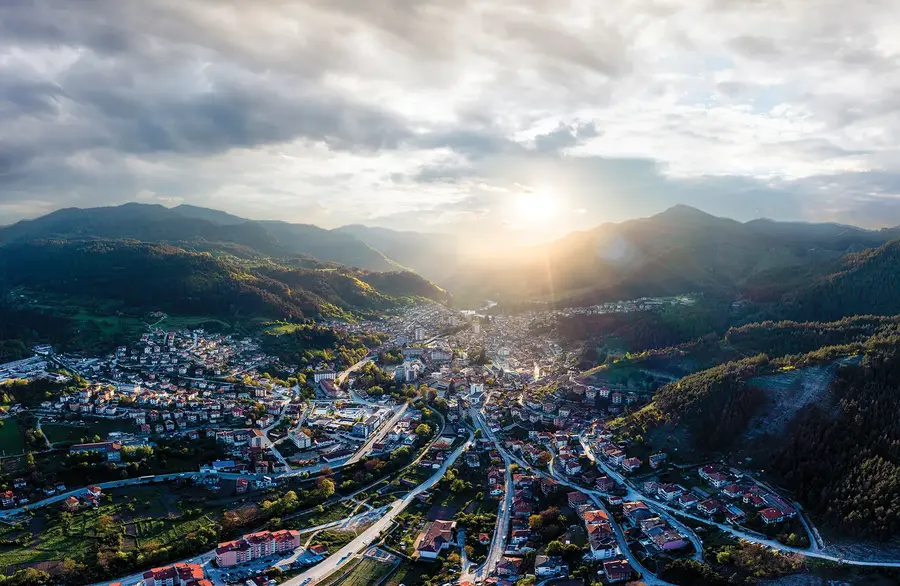

I had visited Devin several times before. The town lies deep in the Western Rhodopes and is best known for its mineral springs, but what keeps drawing me back is the landscape around it: river valleys, forest paths, waterfalls, gorges and viewpoints close enough to combine within a few days. At the beginning of May, Julia and I travelled there with our good friends Nina and Yavor. We wanted to walk some of the routes around the town and spend as much time as possible photographing the spring landscape. For this kind of trip, May suits me particularly well. The days are already mild, the forest has returned to green, and the rivers and waterfalls still carry the water of the colder months. We booked a quiet house close to the centre of Devin and set off for four days on the road and along the trails.
The Road through the Vacha Valley

Our journey began on the road through Krichim. South of the town, the route enters the narrow valley of the Vacha River and continues between steep wooded slopes, exposed rock and a chain of reservoirs. The landscape changes after almost every bend. At times the road is enclosed by the mountain, while a few minutes later the view opens across water and distant Rhodope ridges.

We stopped at a lay-by above Vacha Reservoir. I had wanted to photograph this place for a long time. It is one of the reservoirs I find most photogenic in Bulgaria, especially from the air, where the curves of the water and the surrounding hills form clear layers in the landscape. After several drone flights, we continued towards Devin.

Our host welcomed us warmly, assured us that we could rely on her if we needed anything and recommended several places with good food. After lunch and a short rest from the drive, we headed out for our first sunset at Cherven Kamak above the town.
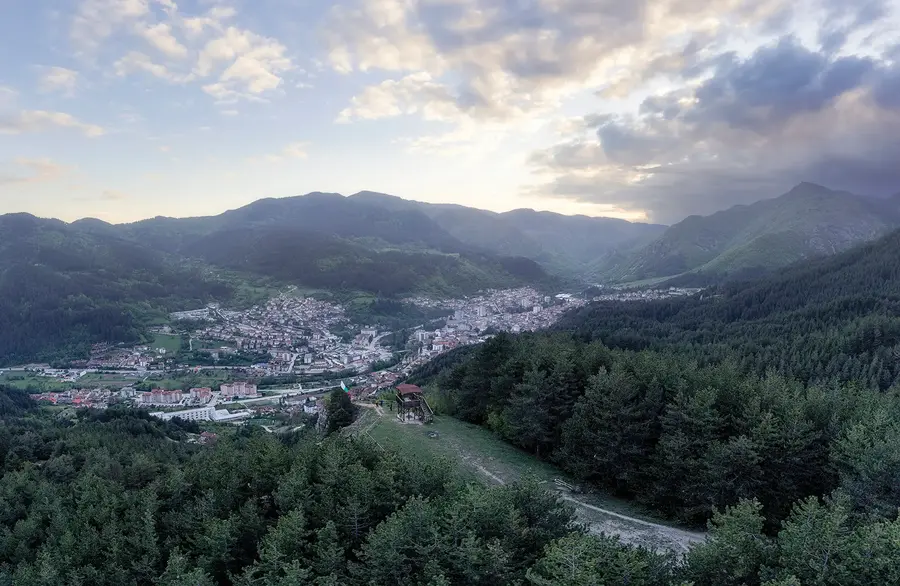
We chose the steeper approach from the eastern edge of Devin. The route gains height quickly along a long sequence of steps before reaching the Hrastevo area and the observation point above the valley. We arrived in time for the last light and stayed until the forest began to grow quiet. At one point we heard the distinctive warning calls of roe bucks reacting to our presence. During an earlier visit, I had also seen female roe deer running between the trees. Even with the lights of Devin directly below, the place still feels wild and closely connected to the surrounding forest.
Above Yagodina and through the Trigrad Gorge

The following morning we drove towards Yagodina and left the car near Hotel Mursal, below the panoramic platform of Orlovo Oko. From there, the walking route climbs along a dirt track and through sections of forest. As the elevation increases, the view gradually opens towards the surrounding ridges.

The metal platform of Orlovo Oko projects above the Buynovsko Gorge and offers a broad view across this part of the Western Rhodopes. We spent some time photographing the landscape before returning to the hotel for lunch.

Later we continued towards Trigrad. The road passes through the Trigrad Gorge, a long passage carved by the Trigradska River into the marble rocks north of the village. In its narrowest part, the road runs close to the river beneath high cliffs, with only limited space for passing vehicles.

For photography, the gorge offered the opposite of the open view from Orlovo Oko. The cliffs compressed the composition, the light reached the road only in narrow sections, and the river provided a continuous line through the frame. We continued to Trigrad and remained in the area until sunset before returning to Devin.
Valchi Kamak, Shiroka Laka and a Rainbow over Devin

On the third day we travelled to the village of Gyovren and walked towards Valchi Kamak. The route leaves the village along a dirt road, climbs steadily and continues through coniferous forest before reaching the ridge and the panoramic platform at around 1,650 metres.

The place reminded me of Orlovo Oko, but the experience was different. The route felt quieter, less developed and less visited. Personally, I preferred Valchi Kamak. The longer approach and the relative silence made the view at the end feel more connected to the walk itself.

Afterwards we continued towards Shiroka Laka, where we planned to photograph the sunset. The village has preserved much of its traditional Rhodope architecture, with old stone-and-timber houses arranged along the slopes on both sides of the river. It is also closely connected with the musical traditions of the region and is home to the National School of Folk Arts.
The spring weather changed our plans. While we were having lunch, heavy rain moved over the village, the clouds thickened and it became clear that there would be no sunset. We took a short walk among the old houses, I made several drone photographs, and then we headed back to Devin.
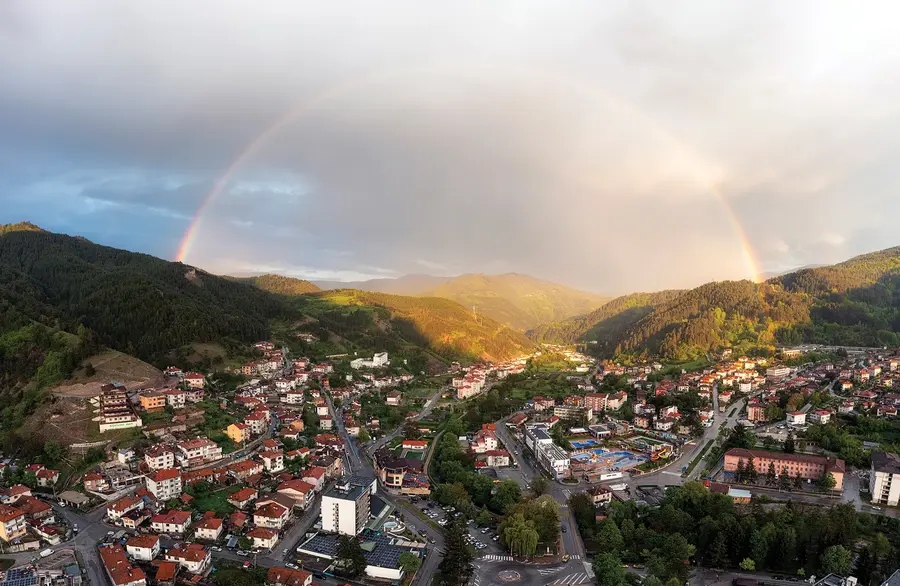
We reached the town shortly before sunset. The rain had passed, the clouds were beginning to break and a rainbow had appeared above the valley. It was an unexpected piece of luck. I launched the drone and created an aerial panorama that brought together the town, the surrounding mountains, the rainbow and the warm light of the golden hour.
Along the Devin River and Back to Cherven Kamak

On our final day we walked the Struilitsa–Lakata–Kaleto eco-trail. The route begins near the mineral pools in the Struilitsa area and follows the bends of the Devin River through forest and rock. Bridges and narrow sections keep the path close to the water, while several branches lead away from the main route.

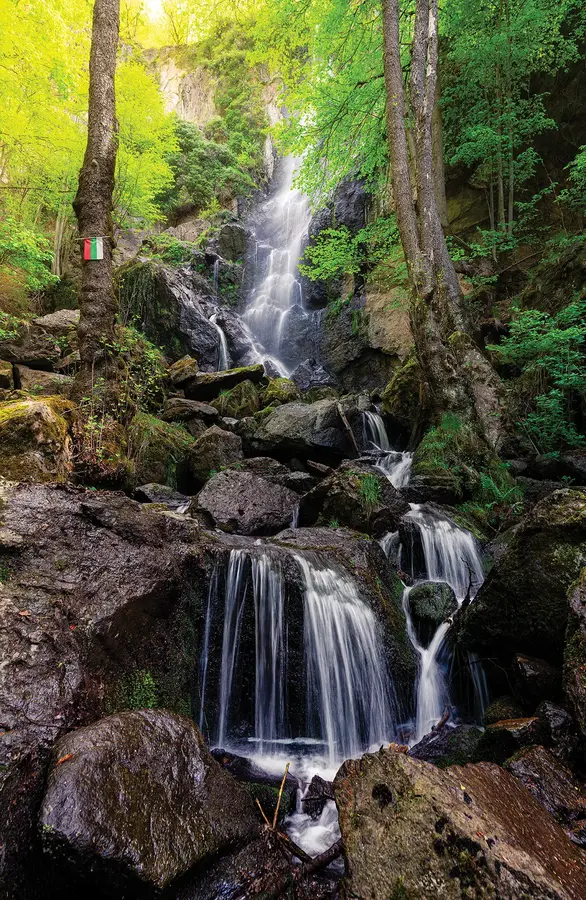
One of them reaches Samodivsko Praskalo, a tall waterfall descending in separate stages through the forest. Spring is one of the better periods to see it with a stronger flow. Farther along the route is Mecheshki Waterfall, where the amount of water depends heavily on the season. We were fortunate to find it flowing.

The path was especially suitable for the kind of photography I enjoy. The river, stones, small cascades and fresh green leaves offered many close compositions, while the bridges and curves of the trail helped connect the individual scenes into a larger story.

That evening we returned to Cherven Kamak for another sunset, but this time we used the second approach. The Hrastevo trail begins from a turn-off on the road towards the Lesichevo area. It is much gentler than the climb from Devin and follows a nearly level forest track. The protected area preserves old black pines, some more than three centuries old, and the walk beneath them was a quiet ending to the day.
When we left Devin, the trip did not feel like a checklist of routes and viewpoints. What remained was the way water, forest and weather had changed our photographs from one day to the next. We had seen full rivers and spring waterfalls, dark gorges, open panoramas, a sunset reached by two different trails and, unexpectedly, a rainbow above the town.
The weather did not always follow our plans, but it gave us the strongest image of the journey. That is one of the reasons I return to Devin: the landscape may be familiar, yet the light never tells the same story twice.