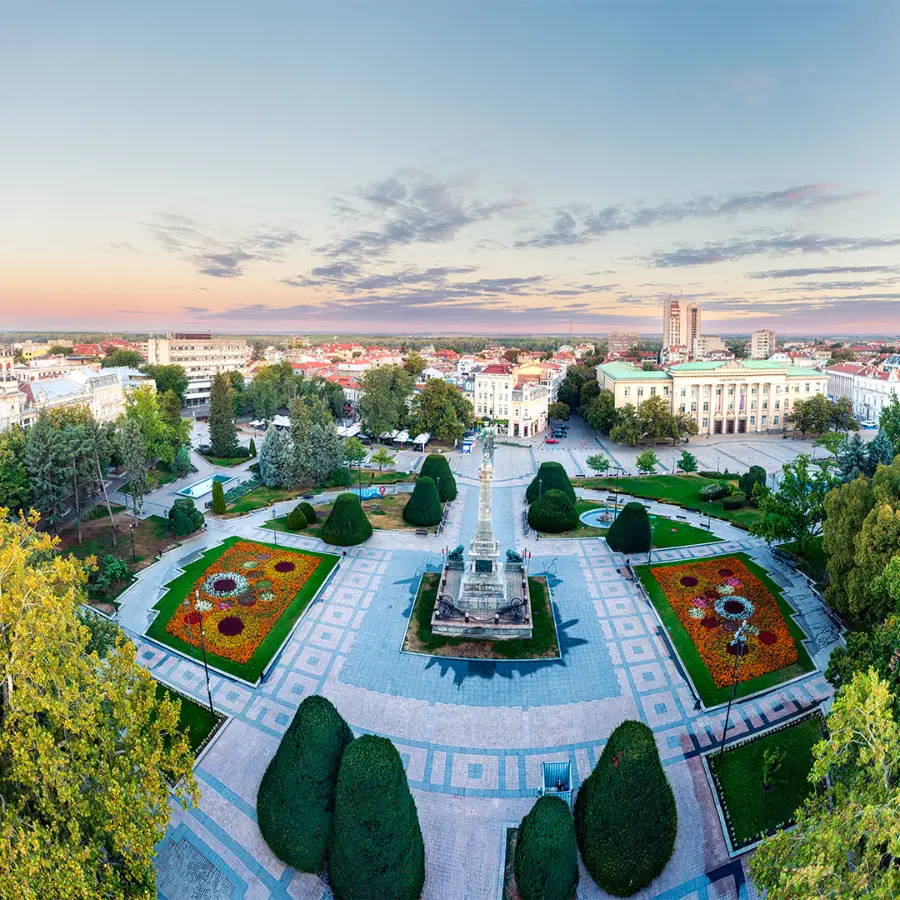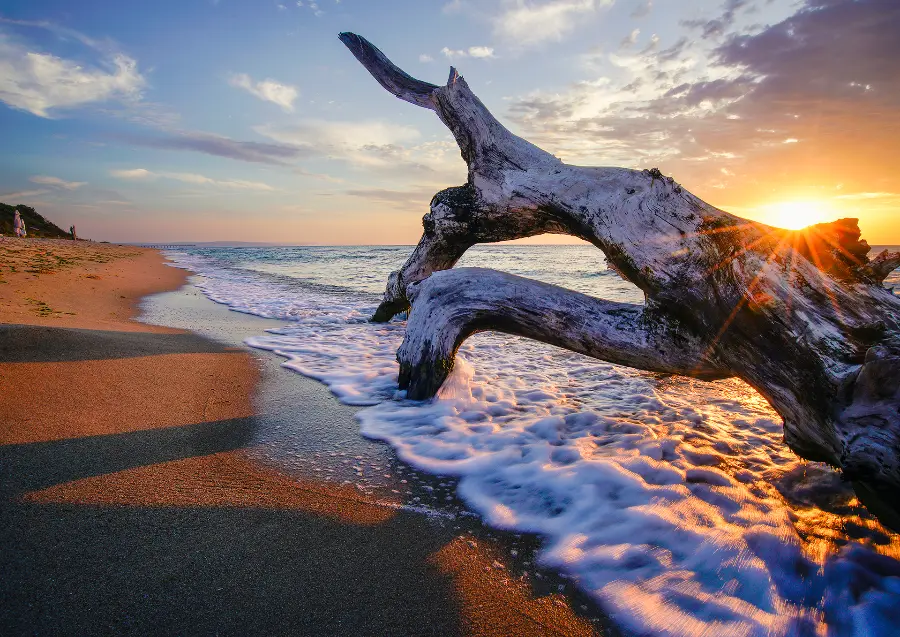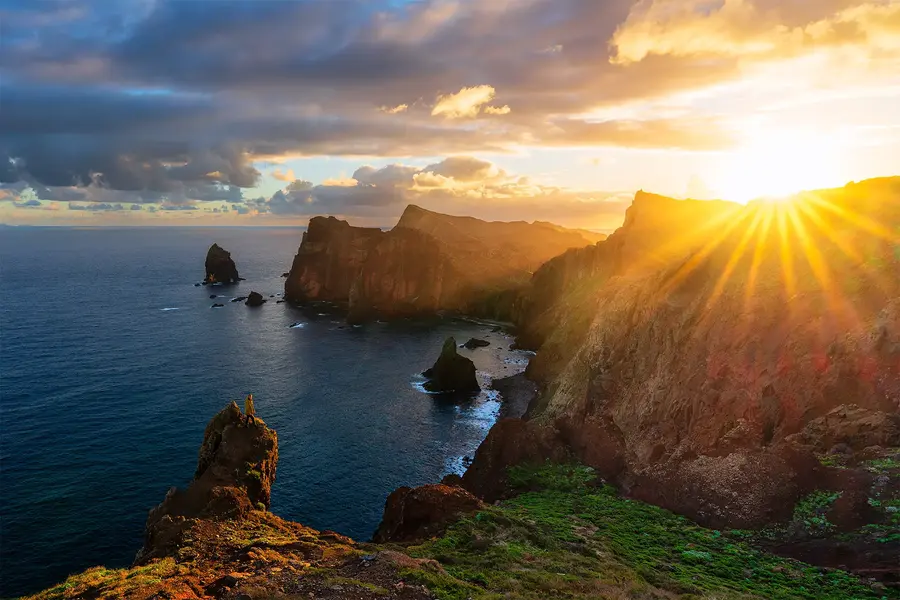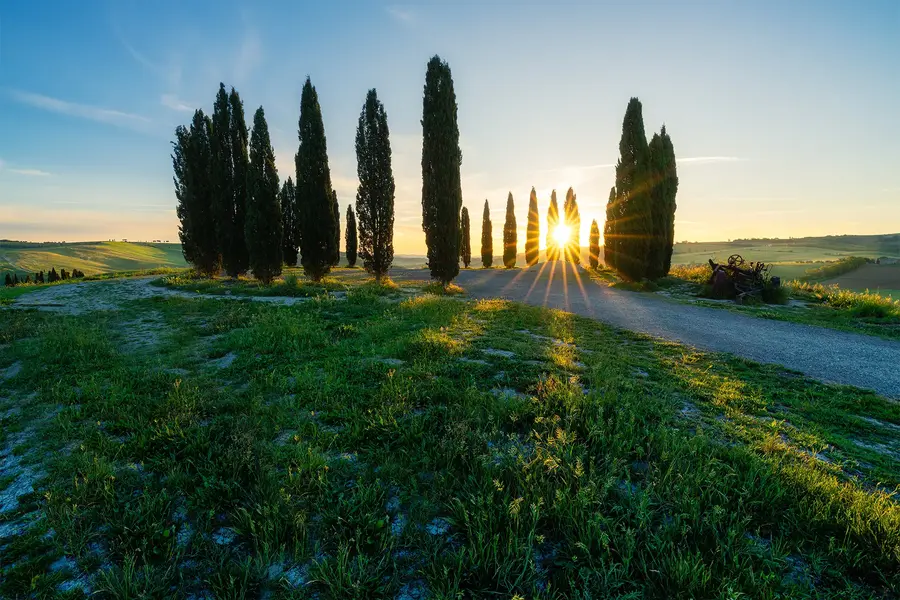

In the autumn of 2025, we decided to give ourselves a slightly longer break and combine several different places into one journey. Our plan was to spend a few days around Provadia and then continue towards Ruse. The places we visited turned out to be far too many for a single story, so we decided to divide the journey into two parts.
A Few Days Around Provadia
Provadia often remains outside the more popular tourist routes, yet the area holds a surprising amount of history, nature and unusual places to explore. Within a relatively small region, you can find a prehistoric salt-production centre, a medieval fortress, unusual natural phenomena and several interesting museums.
Our journey through the Provadia region began at the Wonder Rocks near Tsonevo Reservoir – one of the most recognisable natural landmarks in this part of Bulgaria. The tall limestone formations rise steeply beside the reservoir, their shapes resembling stone towers and giving the impression of a small natural fortress.
During our visit, however, the landscape looked very different from the usual images of the place. The reservoir level was extremely low, and instead of water beneath the cliffs there was dry ground, grass and weeds. Without the water, the Wonder Rocks certainly lose some of their character, but the formations themselves remain impressive and worth seeing.
We continued towards the area around Sladka Voda, where we would spend the next few days. It proved to be a pleasant and peaceful place, far from the noise of the city. The evenings had that particular feeling of being close to nature, when instead of traffic you could even hear jackals howling in the distance.
Ovech Fortress

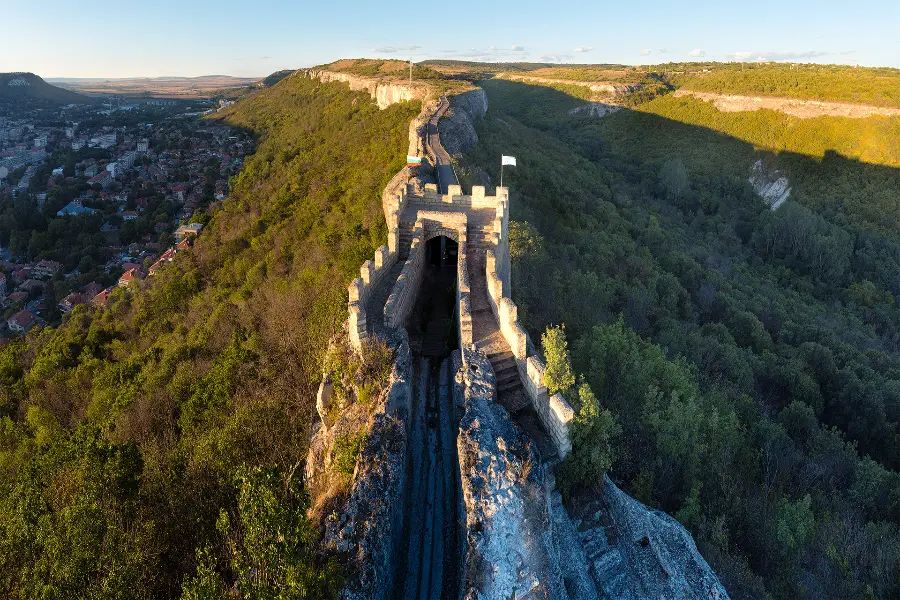
The following day we began our exploration at Ovech Fortress, situated on the Kaleto Plateau above Provadia. Its history reaches back to the third century, and the fortress has carried different names through different periods. Bulgarians know it as Ovech, the Byzantines called it Provat, and later the Ottomans referred to it as Tash Hisar – the “Stone Fortress”.
A flight of steps leads up to the plateau, where wide views open over Provadia and the surrounding landscape. Walking among the remains, it is easy to imagine how important this position must once have been. Ovech served as a significant military, administrative and spiritual centre, while its naturally protected location added even more to its strategic value.

During our visit, part of the site was inaccessible because the bridge was being repaired, so we were unable to explore everything we would have liked. Even so, the fortress interested us enough to decide that we wanted to return one evening for sunset.
A few days later we found ourselves back at Ovech, this time near the end of the day. We had hoped for clouds that would bring more drama to the sky, but autumn gave us a quieter sunset instead. The view from the plateau still made the second visit worthwhile. After several days spent between archaeological sites, museums and natural phenomena, it felt good to finish our route here – high above Provadia, watching the landscape slowly settle into the evening light.
Провадия-Солницата – там, където солта е била богатство
Provadia-Solnitsata turned out to be one of those places that leaves you with far more to think about than you expected before arriving.

The story here begins around 7,400 years ago. Prehistoric communities extracted salt from the saline springs in the area, and a major prehistoric centre gradually developed around its production and trade. Salt was an extremely valuable resource and played an important role in the growth of the settlement.
Archaeological research at the site continues today, and each discovery helps build a clearer picture of the people who lived here thousands of years ago. What makes the place interesting is not only its age, but also the idea that a single natural resource could become the foundation for the development of such an important ancient centre.

During our visit there was a guided talk, as well as information panels that made the tour much more engaging. Hearing how people extracted salt and organised their lives around its production turns the archaeological remains into a story that is much easier to imagine.
Provadia-Solnitsata is definitely worth visiting, especially if you enjoy places you may know little about beforehand but continue thinking about long after you leave.
After the archaeological visit, we headed back towards Tsonevo Reservoir, this time planning to have lunch. We had chosen what looked like a pleasant place beside the water, only to discover that it happened to be closed that day.
The low level of the reservoir stood out once again. Instead of the broad expanse of water we had expected, the landscape looked much drier and harsher. Apparently we had simply not caught Tsonevo at its best, but that gave us another reason to return one day when the reservoir is full again.
We spent the afternoon quietly at the hotel, resting and enjoying the silence.
A Submarine and Glass in Beloslav

The following day our route took us to Beloslav, where two very different but equally interesting museum experiences awaited us – the Slava Submarine Museum and the Museum of Glass.
Visiting the submarine is one of those experiences that is difficult to describe properly afterwards. Instead of simply looking at it from outside, you can step aboard and move through its narrow interior. The corridors, compartments and different mechanisms give a completely different sense of the conditions in which the crew lived and worked. During the tour, the museum staff also shared interesting details about everyday life on board.
The Museum of Glass showed us a completely different side of human creativity. What impressed us most was the demonstration of how glass souvenirs are made. Watching a finished object gradually take shape from a heated mass of glass is very different from simply looking at the final pieces on display.
The two experiences worked surprisingly well together – one brought us closer to history and technology, while the other showed how skill can transform heated glass into a beautiful object.

The ferry in Beloslav is not simply a local curiosity – it is part of everyday life in the town. In the early 1970s, the old channel between Varna Lake and Beloslav Lake was widened and transformed into a deep-water navigation route so that large ships could reach the newly developed Port of Varna-West. This left Beloslav divided between two shores and interrupted the former land connection. A pontoon bridge was used for crossing the canal, but in 1978 it overturned in one of the darkest events in the town’s history, claiming 65 lives. After the tragedy, the pontoon was removed and the ferry remained the main direct connection between the two parts of Beloslav. Today it is used every day by thousands of people and numerous vehicles, and the crossing is free of charge. For local residents, it is far more than an unusual way to cross the canal – it connects residential areas with the railway station, workplaces and the rest of the town while avoiding a long detour around the lake. Beloslav is the only municipality in Bulgaria where ferry transport provides an internal connection between different parts of the town, making this short crossing an essential part of daily life.
Pobiti Kamani – The Stone Forest Near Varna
After lunch in the Devnya area, we continued towards Pobiti Kamani – one of the most unusual natural places near Varna.

From the first steps among the stone columns, the landscape feels completely different from everything around it. Upright rock formations rise from the sand like the remains of a vast stone forest. Some reach several metres in height, others are much lower, and their forms vary so much that it is difficult to believe they were all created by natural processes.
From the first steps among the stone columns, the landscape feels completely different from everything around it. Upright rock formations rise from the sand like the remains of a vast stone forest. Some reach several metres in height, others are much lower, and their forms vary so much that it is difficult to believe they were all created by natural processes.
Pobiti Kamani consists of several groups of natural stone columns situated north and south of Beloslav Lake. Their origin is explained through several scientific hypotheses, and that unresolved element makes the place even more intriguing.
The area was declared a natural landmark as early as 1937 and is protected today. In addition to the stone formations themselves, traces of human presence dating back to the Mesolithic period have also been discovered here.

Pobiti Kamani is not a place that requires an entire day, but it makes an excellent stop if you are already in the area. The walk among the columns is relatively short, yet long enough to appreciate just how different the landscape can become only a few kilometres from the sea.
A few days were enough to show us several very different sides of this part of Bulgaria – from the prehistoric salt-production centre near Provadia and the medieval Ovech Fortress to a submarine, a glass museum and the unusual stone columns of Pobiti Kamani.
What we enjoyed most about the region was precisely this variety. History and nature exist side by side here, allowing completely different experiences to become part of the same journey.
Provadia and its surroundings are definitely somewhere we would return to. There are still more places left to explore, and we would also like to see Tsonevo again, this time with the reservoir full. Our autumn journey, however, continued towards Ruse.