At the end of April, we travelled to Tuscany with two friends who share our interest in photography, early light and long days on the road. This was the first journey abroad that we had organised entirely ourselves. In less than a week, we booked the flights, rented a car and a house, and began filling Google Maps with places we wanted to photograph. Our plan was built around six sunrises and six sunsets. We hoped for mist over Val d’Orcia, but the weather remained mostly clear. Some locations looked different from the photographs we had studied, several plans changed along the way, and not every morning produced the conditions we expected. That was also what made the journey valuable. We were no longer following someone else’s programme. Every decision was ours — when to leave, where to stop, when to wait and when to move on. The photographs became part of a wider story about learning to travel independently and sharing the experience with people who approached the trip with the same patience and curiosity.
A Photography Trip Planned by Four Friends

The journey began with a morning flight to Pisa. We landed around noon, collected the rental car and reached the house in less than three hours. After unpacking, we drove to the nearest supermarket and made our first unplanned stops whenever the road opened towards another view.
That first evening ended with spaghetti in a small hotel restaurant near the house. We returned early because the alarm for the following morning was set for 4:30. From then on, the rhythm of the trip would be shaped by coffee before sunrise, camera bags in the car and quick decisions made beside unfamiliar roads.
The people we met in the smaller towns were relaxed, friendly and willing to communicate even when English was not enough. Restaurants often closed after lunch and reopened in the evening, which did not always fit well with our sunset plans. Still, we never remained hungry, and these small adjustments became part of travelling independently.
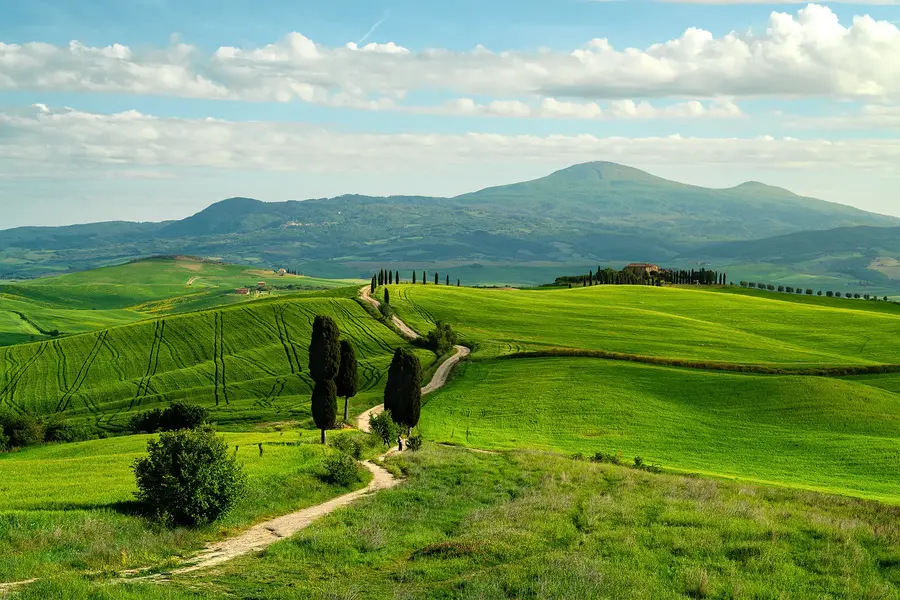
Tuscany also changed the way we thought about the road itself. It was not simply the distance between two saved locations. Farmhouses, fields, cypress trees and distant villages appeared constantly on both sides of the road. Many of the photographs began with an unplanned stop rather than a pin on the map.
The First Sunrise in Val d’Orcia

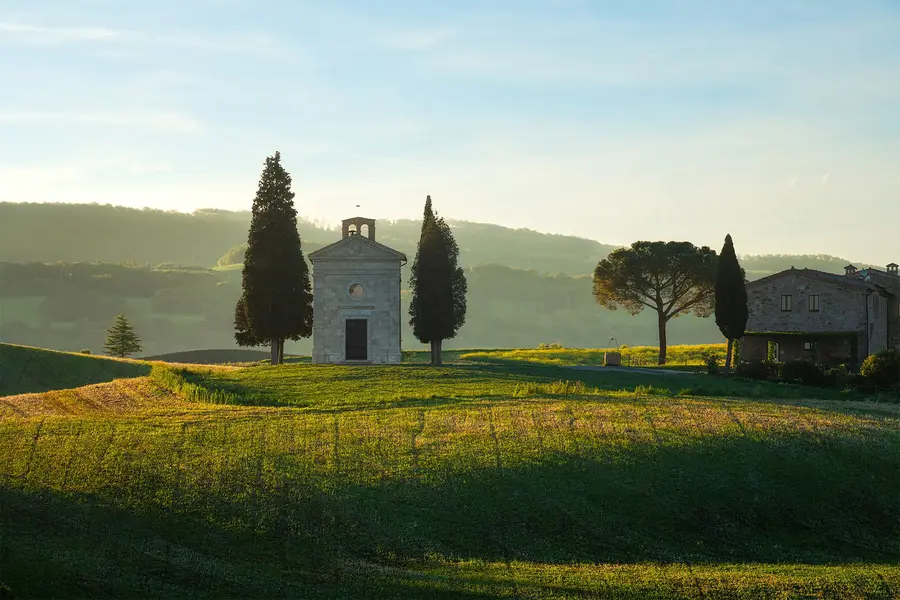
Getting up at 4:30 on the first morning was difficult. We made coffee, loaded the equipment and drove towards Cappella della Madonna di Vitaleta, the small chapel standing among fields and cypress trees near San Quirico d’Orcia.

We had imagined the chapel surrounded by mist, but the morning was clear. The expected conditions never arrived, yet we stayed for almost two hours and worked with the light we had. The landscape slowly gained colour, the shadows moved across the hills, and the first photographs of the journey began to take shape.
Our next stop was the cypress grove near San Quirico d’Orcia. We explored the area, looked for possible ground compositions and made our first drone flights over the fields. From there, we continued to Pienza. Early in the day, before the streets became busy, the historic centre was quiet enough for an unhurried walk, photographs, coffee and something to eat.
The route then took us through Monticchiello and Montepulciano. Later, while waiting for the evening light at Pieve di Corsignano, Miro noticed the sun approaching an opening in the stone bell tower. His attention gave us only a brief moment to prepare, but it was enough to capture the rays passing through the structure.
We ended the day at the landscape near Pienza, the location of the homecoming scene from Gladiator. There was no dramatic sky, but we stayed until the light faded and returned with our first full day of photographs behind us.
A National Holiday in Asciano and Chiusure

Our second day coincided with a national holiday in Italy. We headed towards Asciano without knowing exactly what we would find there, stopping several times along the road to look at the landscape and mark possible viewpoints for another morning.

In the town centre, a brass band had gathered in front of the municipal building. A procession followed through the streets, accompanied by music, flags and local residents. After the quiet countryside of the previous day, this was a completely different kind of photographic experience.
We then travelled to Chiusure for the Artichoke Festival. The small village was crowded with people, food stalls, music and conversation. It was lively and enjoyable, but difficult to explore slowly. Before leaving, we had already decided to return on a quieter morning and see the streets without the festival crowds.
Nearby, we visited Abbazia di Monte Oliveto Maggiore. The large monastic complex stood among forests, cypress trees and cultivated hills, far removed from the noise of the festival. The contrast between the celebration in Chiusure and the quiet surroundings of the abbey gave the day two very different rhythms.
Roadside Light, Poggio Covili and Castiglione d’Orcia

We welcomed the third sunrise at one of the places we had noticed while driving. A farmhouse, cypress trees and the soft lines of the hills formed the kind of scene we had associated with Tuscany long before arriving.

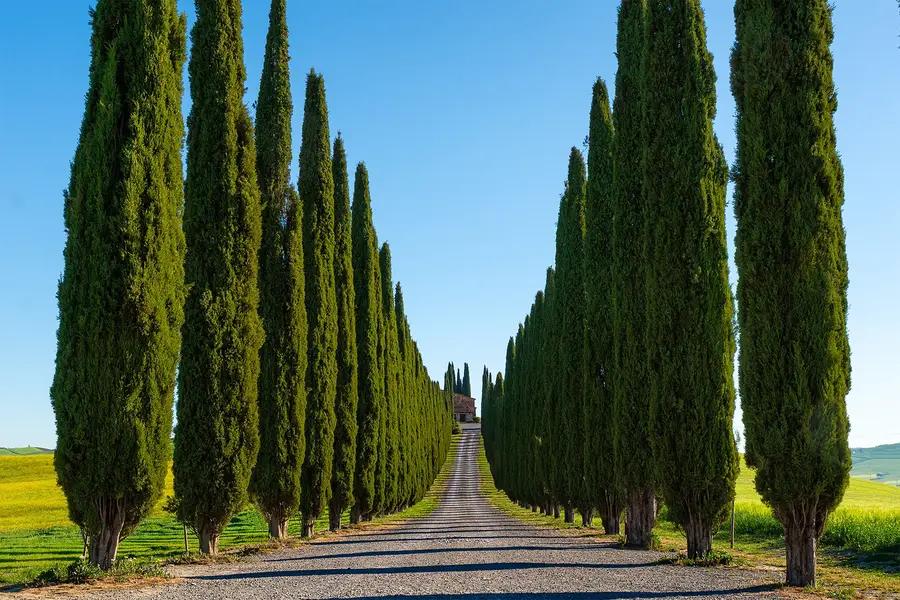
There was no marked viewpoint and no crowd waiting for the light. We photographed from beside the road, made several drone flights and then continued towards Poggio Covili. Its long cypress-lined avenue is one of the most recognisable compositions in Val d’Orcia. We explored the available positions and photographed the house and road before the light became too strong.
The next stop was Castiglione d’Orcia. We walked through the stone streets, stopped for coffee and photographed the village from the air. We wanted to visit the fortress above the town, but it had not yet opened, so we changed the plan instead of waiting.
After lunch and a short rest, we returned to Pienza. This time we stayed on the walls overlooking the valley and watched the evening light move across the hills. The day ended in a small restaurant, without another location waiting for us afterwards.
From Another Clear Morning to Siena and San Gimignano

On the fourth morning, we returned to Cappella della Madonna di Vitaleta for another attempt at photographing the chapel in mist. Once again, the air remained clear. The conditions were similar, but the direction and quality of the light were different enough to make the return worthwhile.

After sunrise, we left the countryside and travelled to Siena. We walked through the historic centre, visited the cathedral, Piazza del Campo and Palazzo Pubblico. The narrow streets, inner courtyards and tall brick structures required a different way of looking after several days spent photographing open landscapes.
San Gimignano was our next stop. It was one of the busiest places of the entire journey, filled with visitors and long queues. We joined the line at Gelateria Dondoli and ate our gelato in the middle of the crowd, but the number of people made it difficult to feel the quieter side of the town.
We ended the day in Montalcino. Behind its defensive walls, the streets were calmer, and the final walk gave us time to slow down after the crowds in Siena and San Gimignano.
Chiusure Without the Festival Crowds

For the fifth sunrise, we returned to Poggio Covili. We arrived early enough to find good positions beside the road. Soon afterwards, a large group of photographers appeared, and the limited space quickly filled.

Once the morning light had passed, we drove back to Chiusure. Without the festival, the village felt completely different. The square was quiet, the brick streets were nearly empty, and details that had disappeared among the crowds were now easy to notice. We stopped for coffee and breakfast and finally saw the everyday character of the place.

Later, we returned to Abbazia di Monte Oliveto Maggiore and photographed the complex and its surroundings from the air. Revisiting locations had become an important part of the trip. We were beginning to understand how the roads connected, where the light came from and which viewpoints deserved more time.
For sunset, we went to the well-known viewpoint above the cypress road at Baccoleno. A fence and a designated observation area had been installed, and signs prohibited drone flights. Some visitors ignored the restriction, but we kept our drones packed and photographed from the permitted area.
The evening light passed across the green hills, the cypress road and the red flowers in the foreground. It was one of the most familiar views in Tuscany, but seeing the place in person also revealed the limits, crowds and practical decisions that remain outside the finished photograph.
The Final Sunrise and One Last Return to Gladiator

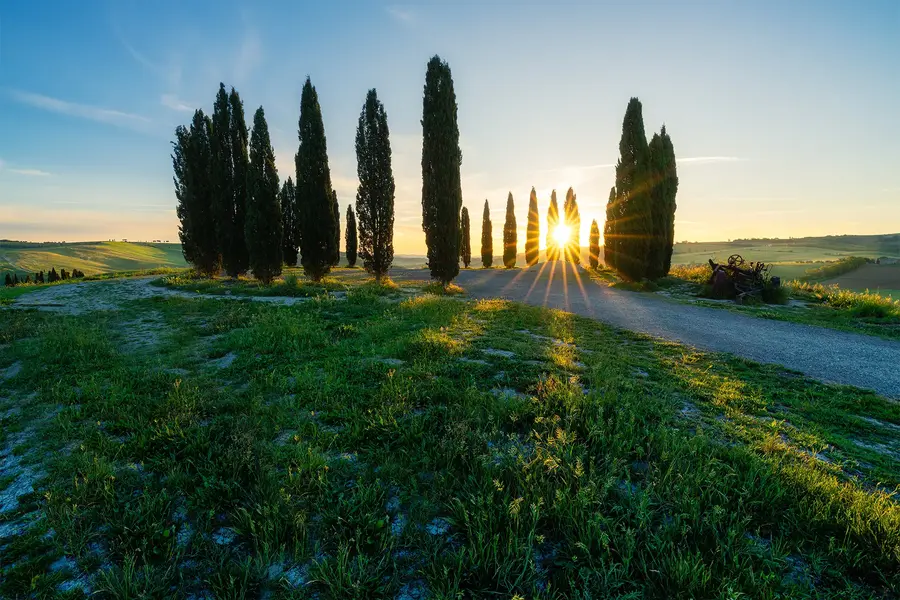
We spent the final sunrise at the cypress grove near San Quirico d’Orcia. By then, the location was no longer unfamiliar. We knew the terrain, the possible compositions and how quickly the low light would change the shadows between the trees.

Before leaving, we stood together among the cypresses and took an aerial group photo with the drone. It remains a memory of the friendship that made this journey special — not only of the landscapes we photographed, but also of the four people who planned the route, carried the equipment and experienced this adventure together.
Afterwards, we explored the area around Castelmuzio, walked through the village and stopped for coffee and breakfast in another small café on the square. We visited the weekly market in San Giovanni d’Asso and then continued to Murlo. There, we walked through the old streets and entered the museum, the first one we had visited in Italy.
While we were resting after a delicious lunch the sky began to fill with wispy clouds. Within a few minutes, we made a decision — we got in the car and headed to the landscape near Pienza associated with the homecoming scene from Gladiator. Choosing the same place again felt appropriate. The road was already familiar, but the light and the clouds were different, giving us one final opportunity to work with the scene.
The trip did not give us the mist we had imagined, and not every sunrise or sunset developed as planned. It gave us something more lasting: the experience of organising photography journey abroad together with two friends who shared the same ideas.
We returned with photographs, new knowledge and greater confidence in our ability to plan the next journey ourselves. Tuscany was no longer a collection of saved locations. It had become a route we had followed, changed and understood through our own experience.